

Biological Identification and Ecological Roles of All 7 Sea Turtles
Every modern sea turtle belongs to one of seven living marine species split across two biological families: hard-shelled Cheloniidae (six species) and the soft-ridged leather-carapace Dermochelyidae (one species, the Leatherback). Knowing how each turtle feeds, breathes, and uses coastal reefs helps snorkelers identify individuals underwater from a respectful 3-meter standoff distance while avoiding disruption to foraging or nesting routines.
| Species | Primary Diet | Max Shell Length / Weight | IUCN Conservation Status | Typical Snorkel Habitat |
|---|---|---|---|---|
| Green Sea Turtle (Chelonia mydas) | Herbivorous: seagrasses & marine algae | 120 cm / 230 kg | Endangered | Shallow coastal seagrass bays & calm reef flats |
| Hawksbill Turtle (Eretmochelys imbricata) | Spongivorous: glass sponges & coral invertebrates | 90 cm / 80 kg | Critically Endangered | Coral crevices, drop-offs & shaded overhangs |
| Loggerhead Turtle (Caretta caretta) | Carnivorous: crabs, mollusks, whelks & sea urchins | 110 cm / 180 kg | Vulnerable | Subtropical reefs, rocky Mediterranean & sandy bays |
| Leatherback Turtle (Dermochelys coriacea) | Gelatinivorous: open-ocean jellyfish & salps | 200 cm / 700 kg | Vulnerable | Deep pelagic waters & monitored nesting beaches |
| Olive Ridley Turtle (Lepidochelys olivacea) | Omnivorous: crabs, shrimp, jellyfish & algae | 70 cm / 50 kg | Vulnerable | Tropical offshore waters & synchronized arribada beaches |
| Kemp's Ridley Turtle (Lepidochelys kempii) | Carnivorous: blue crabs & benthic invertebrates | 65 cm / 45 kg | Critically Endangered | Shallow coastal bays of Gulf of Mexico & US Atlantic |
| Flatback Turtle (Natator depressus) | Carnivorous: sea cucumbers, soft corals & jellyfish | 95 cm / 90 kg | Data Deficient / Protected | Northern Australian continental shelf lagoons |
How to Tell Green, Hawksbill, and Loggerhead Turtles Apart Underwater
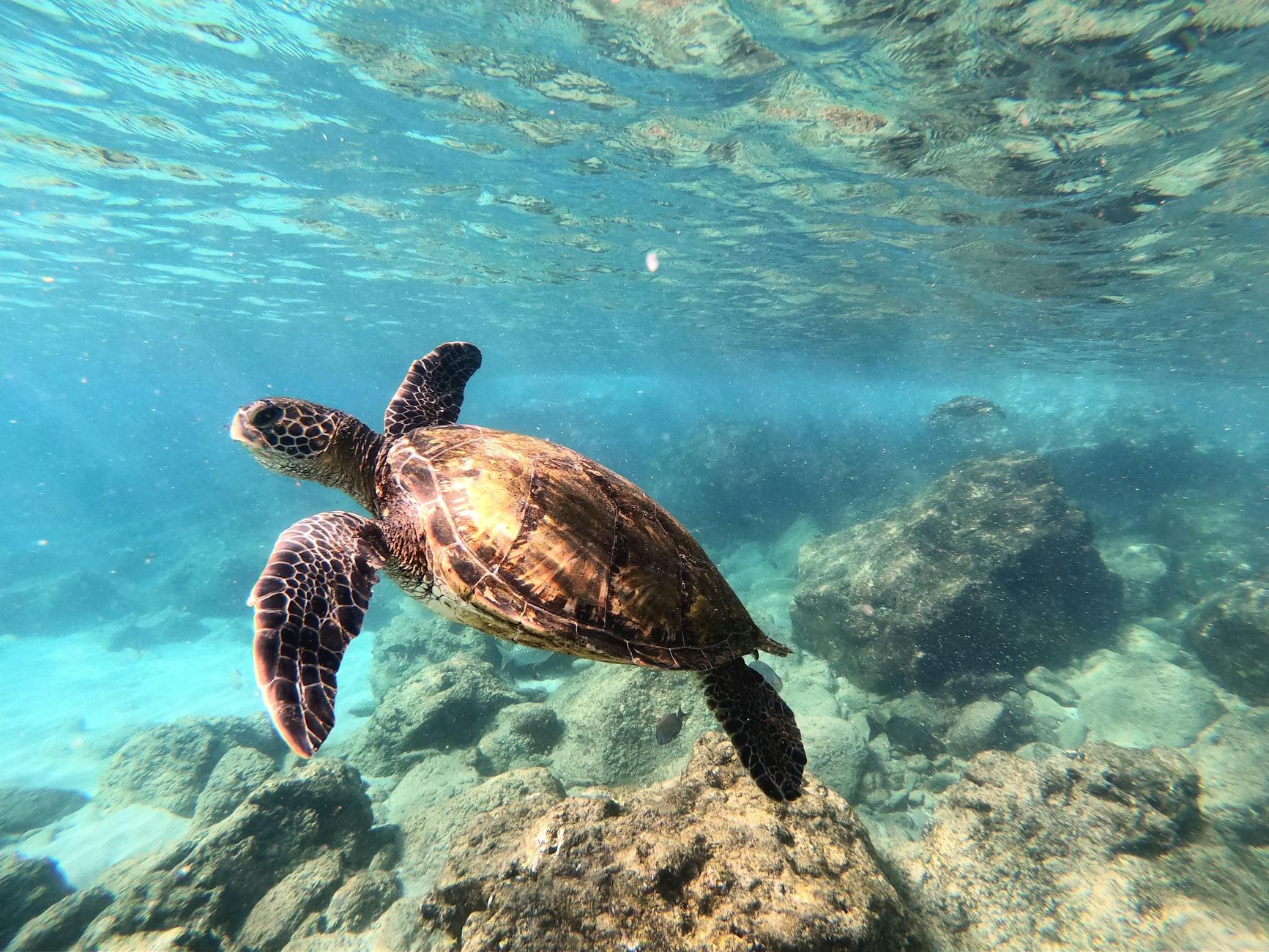
In 90 percent of recreational snorkel encounters worldwide, swimmers observe either Green or Hawksbill turtles. Focus first on head shape and feeding behavior rather than shell color, which varies heavily with algae encrustation. Green sea turtles show a blunt, rounded snout, single pair of prefrontal scales between their eyes, and uncurved shell edges; they steadily crop blades of coastal seagrass without touching live coral heads. Hawksbill turtles stand out through a narrow, bird-like pointed beak ideal for prying glass sponges out of tight coral pockets, paired with serrated outer shell edges.
Along Mediterranean bays, Florida, and southern Great Barrier Reef cays, bulky Loggerhead turtles are distinguished by disproportionately broad skulls and reddish-brown shells built to crush heavy crustaceans. Conversely, oceanic giants like the Leatherback lack hard bony scutes altogether and rarely approach shallow daytime snorkel lagoons, making supervised beach-nesting watches or pelagic boat charters their primary viewing contexts. Read our Wildlife Standoff Guide and check each regional sanctuary hub to pair the species you hope to spot with the right coastal park.
Field Etiquette and Conservation Realities Across Every Habitat
Whether you cross paths with a calm Green sea turtle cropping seagrass meadows, an agile Hawksbill probing coral pockets for sponges, or a wide-headed Loggerhead cruising Mediterranean reefs, calm horizontal swimming posture protects wild populations. Air-breathing sea turtles surface frequently to inhale and inspect surroundings, so keeping a quiet 3-meter perimeter off the creature’s side prevents stress responses while giving everyone unobstructed underwater views. Never block vertical surfacing lanes above resting turtles under reef shelves, keep flash lighting turned off, and move fins slowly above sandy bottoms to preserve visibility.
All seven living marine turtle species face coastal habitat pressure, plastic ingestion risks, incidental fishing gear entanglement, and warming nesting beaches tracked carefully under IUCN Red List assessments and national sanctuary laws. Choosing responsible local boat captains, respecting guided marine reserve corridors, and wearing mineral non-nano zinc protection keeps critical seagrass nurseries thriving across every ocean basin.