

Overview: The Oasis of “Turtle City” in the Wild Indonesian Flow
Nestled in the central heart of the UNESCO World Heritage-listed Komodo National Park, the island of Siaba Besar harbors one of the planet’s most miraculous marine habitats. While the surrounding straits between Flores, Rinca, and Komodo Island are famous for furious, washing-machine tidal currents that surge at up to 8 knots, Siaba Besar is a geological wonder: a sweeping, sheltered horseshoe-shaped lagoon protected from oceanic turbulence.
Because of this unique topography, the bay provides a calm, safe sanctuary amidst wild waters, earning its legendary nickname among marine biologists and divemasters worldwide: “Turtle City”.
                   SAVU SEA / PACIFIC TIDAL SURGE (6-8 Knots)
                               │  │  │
                               ▼  ▼  ▼
       ┌─────────────────────────────────────────────────────────────┐
       │                SIABA BESAR PROTECTED EMBAYMENT              │
       │                                                             │
       │     [ Outer Coral Ridge ]           [ Turtle City Core ]    │
       │   ═════════════════════════       ░░░░░░░░░░░░░░░░░░░░░░░░░ │
       │   (Blacktip & Manta Patrol)         (30+ Green Turtles)     │
       │                                                             │
       │             [ Finger Coral Labyrinth & Seagrass ]           │
       │             vvvvvvvvvvvvvvvvvvvvvvvvvvvvvvvvvvvvv           │
       │             (Porites cylindrica & Halophila beds)           │
       │                                                             │
       │   ───────────────────────────────────────────────────────   │
       │              Siaba Besar Mangroves & White Sand             │
       └─────────────────────────────────────────────────────────────┘
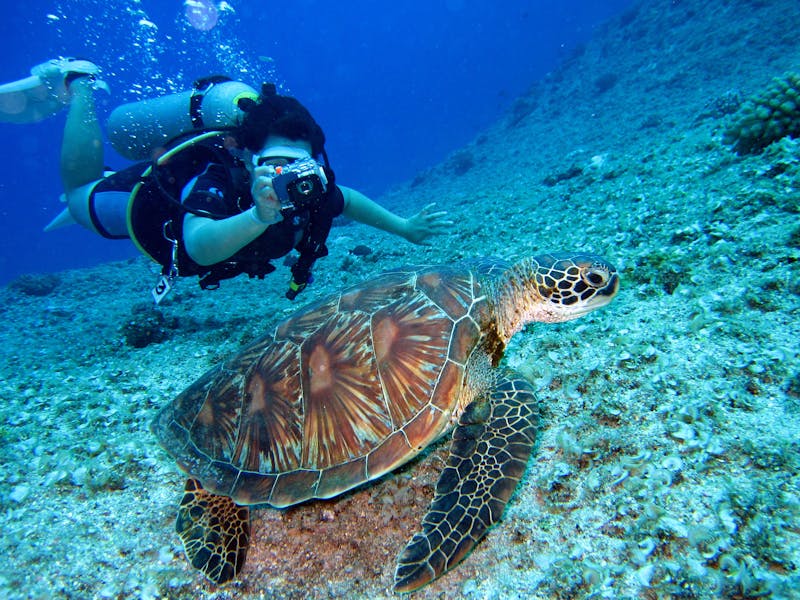
Within the tranquil shallows of Siaba Besar, vast plateaus of branching finger corals and lush underwater seagrass prairies form an idyllic feeding ground and resting nursery for dozens of resident Green Sea Turtles (Chelonia mydas) and Hawksbill Turtles (Eretmochelys imbricata) . It is completely routine during a single 45-minute snorkel or dive at Turtle City to encounter 15 to 30 individual turtles grazing, dozing in coral hollows, or gracefully ascending to the glass-like surface to draw breath.
Governed strictly by Balai Taman Nasional Komodo (BTNK) under Indonesia’s Ministry of Environment and Forestry (Kementerian Lingkungan Hidup dan Kehutanan), Siaba Besar is an intensely protected marine wilderness. Reached solely by boat from the bustling port town of Labuan Bajo, it offers an unparallelled window into pristine marine biodiversity where turtles coexist with harmless whitetip reef sharks, elegant spotted eagle rays, and vibrant schools of reef fish.
Komodo National Park: Full-Day Speedboat Tour (Padar, Komodo & Turtle City)
Comprehensive day cruise from Labuan Bajo visiting Padar Island viewpoint, Komodo dragon rangers, Pink Beach, and snorkeling with turtles at Siaba Besar.
Marine Biology & Foraging Ecology at Siaba Besar
The exceptional carrying capacity of Siaba Besar’s marine ecosystem is rooted in its unique benthic biodiversity, where two primary ecological zones merge:
  SURFACE (Snorkeler with SMB & Vest)   ~~~~~~~~~~~~~~~~~~~~~~~~~~~~~~~~~~~~~~~~
                                        │ (3-Meter Mandatory Standoff Buffer)
                                        ▼
  TURTLE FORAGING & CLEANING ZONE      🐢 [Chelonia mydas / Eretmochelys imbricata]
  (Depth: 2.0m - 7.0m)                  │ Grazing on seagrass / resting in coral cups
                                        ▼
  PORITES CORAL LABYRINTH & SEAGRASS   vvvvvvvvvvvvvvvvvvvvvvvvvvvvvvvvvvvvvvvvvv
                                       Porites cylindrica & Acropora formosa
                                       Halophila ovalis & Halodule uninervis
1. The Green Sea Turtle (Chelonia mydas) Community
The Green turtles of Siaba Besar range from energetic juveniles (carapace length 40–60 cm) to colossal matriarchs exceeding 1.2 meters in shell length and weighing upwards of 180 kilograms. The western and central sectors of the bay are carpeted by extensive beds of Paddle Grass (Halophila ovalis), Sickle Seagrass (Thalassia hemprichii), and red turf algae.
Green turtles spend up to 8 hours a day slowly patrolling these pastures, using their serrated lower beaks to crop the vegetation with surgical precision. Because the bay is free from heavy wave action and predatory tiger sharks (Galeocerdo cuvier) rarely enter the inner shallows during daylight, these turtles exhibit an unusually calm, undisturbed demeanor, often allowing respectful snorkelers floating motionless on the surface to observe their feeding mechanics from 3 meters away.
2. The Hawksbill Sea Turtle (Eretmochelys imbricata) Colony
Concentrated along the eastern coral ridges and outer bommies of Siaba Besar, Hawksbills hunt among massive colonies of Finger Coral (Porites cylindrica) and Staghorn Coral (Acropora formosa).
Hawksbills are specialized spongivores, equipped with a narrow, pointed beak designed to extract rubbery sponges (Suberites and Spheciospongia) growing in deep limestone recesses. In doing so, they control sponge overgrowth that would otherwise smother reef-building coral polyps.
Symbiotic Cleaning Stations & Marine Biodiversity
Scattered across Turtle City are colossal Porites lutea coral heads functioning as permanent marine cleaning stations. Here, turtles settle into customized depressions in the coral, spreading their limbs to enter a trance-like state while:
- Bluestreak Cleaner Wrasses (Labroides dimidiatus) clean parasites from their neck folds, armpits, and cloaca.
- Emperor Angelfish (Pomacanthus imperator) and Surgeonfish (Acanthurus triostegus) graze nuisance algae from their carapaces.
Beyond sea turtles, Siaba Besar is a hotspot for extraordinary marine life:
- Elasmobranchs: Solitary Whitetip Reef Sharks (Triaenodon obesus) doze peacefully on sandy channels between coral formations; Spotted Eagle Rays (Aetobatus narinari) and Bluespotted Ribbontail Rays (Taeniura lymma) glide through the shallows.
- Critters & Macro Life: The sandy fringes host the elusive Flamboyant Cuttlefish (Metasepia pfefferi), Seahorses (Hippocampus kuda), and colonies of Mandarin Fish (Synchiropus splendidus) in the staghorn thickets.
Detailed Bathymetry, Reef Zones & Snorkel Drift Routes
Navigating Siaba Besar safely requires understanding its three distinct bathymetric zones:
WEST                                 CENTER                                  EAST
[ Outer Current Ridge ]      [ The Coral Labyrinth ]                 [ The Sandy Lagoon ]
   Depth 8-20m                    Depth 2-6m                              Depth 1.5-3m
        │                              │                                       │
     ════════                       vvvvvvvv                                ░░░░░░░░
  (Drift Snorkel / Rays)      (Core Turtle City - 25+ Turtles)          (Seagrass Pastures)
                  SIABA BESAR SNORKEL SWIM & DRIFT ROUTE

  [ Liveaboard / Day-Boat Mooring Buoy ]
          │  Enter water with guide; deploy Surface Marker Buoy (SMB)
          ▼
  [ Shallow Sand & Seagrass Plateau (1.5m - 3.0m) ]  --> Juvenile Green Turtles Grazing 🐢
          │  Gently kick south-southeast across the inner bay
          ▼
  [ Porites cylindrica Labyrinth (3.0m - 6.0m) ]     --> Massive Sleeping Turtles in Hollows
          │  Observe wrasse cleaning stations on coral bommies
          ▼
  [ Outer Reef Slope & Sand Channels (6.0m - 12.0m) ] --> Hawksbills & Whitetip Reef Sharks
          │  Signal boat tender for immediate zodiac pick-up
          ▼
  [ Safe Boarding via Tender Boat Ladder ]
1. The Inner Seagrass Flats (Depth: 1.5 to 3.0 meters)
- Characteristics: Flat carbonate sand beds dotted with patches of Halophila ovalis seagrass and small brain corals (Platygyra).
- Turtle Activity: Prime morning feeding area for juvenile and sub-adult Green turtles. Excellent for beginner snorkelers and children because the water is shallow, crystal-clear, and completely current-free.
2. The Central Finger Coral Labyrinth (Depth: 3.0 to 6.0 meters)
- Characteristics: Endless forests of branching Porites cylindrica that form complex ridges, canyons, and sandy clearings.
- Turtle Activity: The true heart of “Turtle City”. Adult Green turtles measuring over 1 meter rest wedge-like between coral branches to nap between feeding cycles. Every 10 to 15 minutes, a resting turtle pushes off the bottom, ascends directly to the surface to take three rapid breaths of air, and glides back down.
3. The Outer Channel & Drop-Off (Depth: 6.0 to 18.0 meters)
- Characteristics: A sloping reef wall that drops into the deeper channel connecting Siaba Besar to Siaba Kecil.
- Turtle Activity: Frequented by Hawksbill turtles, large Trevally jacks (Caranx ignobilis), passing Manta Rays (Mobula alfredi), and resting whitetip reef sharks on the deep sand chutes. Caution: Outer currents can be swift during mid-tide changes; drift only with a certified guide holding a Surface Marker Buoy (SMB).

Komodo 3D/2N Luxury Liveaboard: Diving & Snorkeling Expedition
All-inclusive multi-day traditional Phinisi cruise covering Siaba Besar Turtle City, Manta Point, Batu Bolong, and Komodo dragon ranger trekking.
National Park Regulations, Marine Laws & Fines
Komodo National Park is an internationally celebrated biosphere reserve protected under strict Indonesian Federal Law (Undang-Undang No. 5 Tahun 1990 regarding Conservation of Living Natural Resources):
Conservation Authority: Enforced in accordance with [Coral Triangle Center](https://www.coraltrianglecenter.org) standards.
Balai Taman Nasional Komodo (BTNK) Statutory Regulations:- Mandatory Park Guide Escort: Independent, unguided swimming at Siaba Besar is prohibited. All water activities must be supervised by a licensed BTNK park ranger or a certified local divemaster.
- Strict No-Glove Policy: Wearing neoprene or fabric dive gloves is strictly prohibited throughout Komodo National Park. This federal rule eliminates the temptation for snorkelers and divers to touch, hold, or manipulate corals and turtles.
- Compulsory Surface Marker Buoys (SMB): Every dive group and snorkeling tender must deploy an orange or yellow SMB to alert boat captains in the active navigation channels.
- 3-Meter Minimum Distance: Touching, cornering, riding, or chasing a sea turtle carries immediate expulsion from the park and fines of up to 10,000,000 IDR (~$640 USD) for the tour operator.
- Zero Anchoring on Reefs: Boats must tie exclusively to designated BTNK mooring buoys. Dropping anchor onto coral substrate is a federal crime resulting in boat impoundment.
Seasonality, Water Temperatures & Visibility
Komodo National Park features distinct tropical weather patterns influenced by the Indonesian Throughflow:
Month:      Jan  Feb  Mar  Apr  May  Jun  Jul  Aug  Sep  Oct  Nov  Dec
Sighting:  [==== High 90% ====] [======== Peak 99% ========] [== High 90% ==]
Conditions: West Monsoon Swell   Dry Southeast Monsoon (Calm)  Shoulder Seas
Water Temp: 28°C 28°C 27°C 27°C 26°C 25°C 25°C 25°C 26°C 27°C 28°C 28°C
Visibility:  15m  15m  20m  25m  30m  30m  30m  30m  30m  25m  20m  18m
- Dry Season (April through November): The undisputed prime window for visiting Komodo. Southeast trade winds keep skies dry and sunny. Sea conditions inside the park are exceptionally calm, and visibility at Siaba Besar reaches 25 to 30+ meters. Note: Water temperatures in central Komodo drop slightly between June and August (25°C–26°C) due to deep-sea upwelling, so a 3mm wetsuit or neoprene vest is recommended.
- Wet Season (December through March): The Northwest Monsoon brings occasional tropical rain squalls and heavier open-ocean swells in the northern and southern passages. However, because Siaba Besar is deeply sheltered, turtle snorkeling remains reliable whenever boat crossings from Labuan Bajo are permitted by the harbor master.
Logistics & Access Routes to Siaba Besar
[ Bali (DPS) / Jakarta (CGK) ] ──── Commercial Flight (1 hr / 2.5 hrs) ───┐
                                                                          ▼
[ Labuan Bajo Port (Flores) ]  ──── Speedboat / Phinisi Liveaboard ──────► [ SIABA BESAR ]
1. Gateway Airport & Domestic Flights
- Airport: Fly into Komodo International Airport (LBJ) in Labuan Bajo on the western tip of Flores.
- Airlines: Direct 1-hour flights operate multiple times daily from Bali (DPS) and 2.5-hour flights from Jakarta (CGK) via Garuda Indonesia, Batik Air, and Indonesia AirAsia.
2. Getting from Labuan Bajo to Siaba Besar
- Full-Day Speedboat Tour: Departs Labuan Bajo Marina at 06:00–06:30 AM. Transit time to Siaba Besar is approximately 45 to 60 minutes. Speedboat tours typically combine Siaba Besar with Padar Island, Pink Beach, and Komodo Dragon trekking on Komodo or Rinca Island.
- Traditional Phinisi Liveaboard: 2-night to 7-night expeditions departing Labuan Bajo. Liveaboards moor inside Siaba Besar’s calm bay for extended morning and sunset snorkel sessions.
- Private Speedboat Charter: Ideal for photography enthusiasts and families seeking custom arrival times before shared tour boats arrive.
National Park Fees & Ticketing (2026 Updated)
- Weekday Entrance Ticket: 175,000 IDR (~$11.50 USD) per person.
- Weekend / Public Holiday Ticket: 250,000 IDR (~$16.50 USD) per person.
- Snorkeling Activity Permit: 50,000 IDR (~$3.25 USD).
- Local Ranger & Tourism Tax: 100,000 IDR (~$6.50 USD).
- Total Average Cost per Snorkeler: Approx. 325,000 to 400,000 IDR ($21 to $26 USD) per day, collected by your tour operator or paid at the Labuan Bajo BTNK Harbor Office.
Pricing Benchmarks & Verified Local Dive Centers
| Service / Trip Type | IDR (Indonesian Rupiah) | USD Equivalent ($) | Notes / Inclusions |
|---|---|---|---|
| Full-Day Shared Speedboat Excursion | 1,350,000 – 1,750,000 IDR | $88.00 – $115.00 | Includes lunch, guide, snorkeling gear, 6 stops |
| Private Speedboat Charter (Day Trip) | 8,500,000 – 12,000,000 IDR | $550.00 – $780.00 | Capacity 4-8 pax; fully customized itinerary |
| Shared 3D/2N Phinisi Liveaboard | 4,500,000 – 7,500,000 IDR | $290.00 – $490.00 | Cabin accommodation, all meals, multiple dives |
| Snorkel Gear Hire (Full Day) | 100,000 – 150,000 IDR | $6.50 – $10.00 | Panoramic mask , snorkel, open-heel fins, 2mm vest |
Verified Local PADI 5-Star Operators
- Scuba Junkie Komodo
- Accreditation: PADI 5-Star Resort #24227
- Website: https://www.scubajunkiekomodo.com | Email: [email protected] | Phone: +62 821 3790 8161
- Location: Pantai Waecici Eco-Resort & Labuan Bajo Harbor Office
- Highlights: Renowned worldwide for ethical wildlife guidelines, eco-friendly liveaboard/resort operations, and deep biological expertise on Komodo’s turtle populations.
- Uber Scuba Komodo
- Accreditation: PADI 5-Star Instructor Development Center (IDC) #24467
- Website: https://uberscuba.life | Email: [email protected] | Phone: +62 813 3962 6506
- Location: Jl. Soekarno Hatta, Labuan Bajo Marina Strip
- Highlights: Premium day-boat expeditions aboard custom-built wooden cruisers equipped with spacious dive decks, shaded sundecks, and experienced naturalist guides.
- Dragon Dive Komodo
- Accreditation: PADI 5-Star IDC #25231
- Website: https://dragondivekomodo.com | Email: [email protected] | Phone: +62 878 6016 1471
- Location: Main Street, Labuan Bajo
- Highlights: Highly rated dive hostel and operator organizing daily small-group speedboat trips to Siaba Besar, Manta Point, and Castle Rock.
Ethical Snorkeling & Marine Encounter Guidelines
                    RESPONSIBLE TURTLE CITY FIELD PROTOCOLS

     Snorkeler Floating Silently on Surface (Wearing Lifejacket/Vest)
     ~~~~~~~~~~~~~~~~~~~~~~~~~~~~~~~~~~~~~~~~~~~~~~~~~~~~~~~~~~~~~~~
                                    │
                                    │  3 METERS (10 FEET) MINIMUM BUFFER
                                    │  ZERO PHYSICAL TOUCHING
                                    ▼
                         🐢 [Green Sea Turtle]
                                    │
                                    ▼
       [ Porites Finger Coral Beds ] vvvvvvvvvvvvvvvvvvvvvvvvvvvvvvv
- Do Not Block Vertical Surfacing Lanes: Turtles at Siaba Besar regularly ascend to the surface for air. If you see a turtle begin its upward swimming stroke, gently back away horizontally to give it a 5-meter radius of clear open surface.
- Maintain Neutral or Positive Buoyancy: Never attempt to stand on, touch, or push off the fragile Porites cylindrica coral branches. Finger corals are extremely brittle and take decades to regenerate.
- No Flash Underwater Photography: Action cameras and mirrorless housings should be set to capture natural ambient light. Direct electronic strobe flashes cause acute disorientation in sea reptiles.
- Listen to Your Divemaster Regarding Currents: While the inner bay is calm, never drift beyond the outer markers unless instructed by your guide.
Red Flags & What to Avoid at Siaba Besar
Red Flags & What to Avoid at Siaba Besar ('Turtle City', Komodo National Park)
Independent critique, common tourist traps, and local marine compliance advisories.
At Siaba Besar ('Turtle City', Komodo National Park), underwater clarity is highest during Morning 09:00-13:00 (15–30m). By late morning, coastal winds kick up chop and tourist activity stirs bottom sediments, cutting visibility significantly. Resident sea turtles typically retreat to deeper resting ledges once human traffic peaks.
Reaching Siaba Besar ('Turtle City', Komodo National Park) requires vessel transit. Avoid booking unregulated freelance boats that lack emergency marine VHF radios, licensed skippers, lifejackets, and insurance. Only book vetted operators with certified guides to ensure safe mooring and eco-compliant operations.
Wild sea turtles at Siaba Besar ('Turtle City', Komodo National Park) are protected by national marine sanctuaries. Zero physical contact or harassment of marine megafauna; 3-meter minimum buffer. Touching, cornering, riding, or feeding turtles carries severe statutory wildlife fines, immediate park ejection, and potential legal prosecution under Indonesia conservation laws.
Chemical sunscreens containing oxybenzone, octinoxate, and octocrylene poison fragile coral polyps and marine turtle nursery habitats. Use exclusively certified 100% non-nano zinc oxide mineral sunscreens or wear UPF 50+ rashguards to prevent sunscreen wash-off in the protected reef zone.
Frequently Asked Questions & Direct Choice Field Guide
Guided Tour vs Independent Shore Snorkeling in Siaba Besar — Which should you book?
Book a guided excursion (from $126 USD) if you want guaranteed encounters, boat access to outer reefs, certified safety skippers, and high-quality snorkel gear; choose independent shore snorkeling ($25.00 USD) only if you are an experienced ocean swimmer equipped with your own reef-safe gear and comfortable navigating local shore breaks and current corridors.
Guided tours provide dedicated spotters who know current turtle feeding clusters, whereas independent snorkelers often waste hours searching murky shallows.
Early Morning vs Midday Snorkeling — When is turtle sighting probability highest?
Go during Morning 09:00-13:00, which delivers an optimal 95% sighting probability and crystal 15–30m underwater visibility before offshore trade winds churn bottom sediments and tourist crowds arrive.
After 11:00 AM, heavy boat traffic and hundreds of recreational swimmers stir up fine silt, reducing underwater clarity by up to 50% and driving grazing turtles into deeper offshore trenches.
Peak Season (April, May, June) vs Shoulder Months — When are water conditions best?
Visit during April, May, June for peak feeding activity, minimal rainfall, and warm sea temperatures ranging from 25°C to 29°C.
While resident sea turtles inhabit Siaba Besar year-round, booking morning excursions during peak months ensures calm surface conditions, though reserving tour slots 2–3 weeks ahead is essential to avoid sold-out capacity limits.
What are the statutory wildlife distance rules and legal penalties in Indonesia?
Swimmers must maintain a strict minimum 3-meter (10-foot) buffer from all sea turtles at all times under Indonesia marine conservation laws.
Touching, riding, pursuing, or cornering a turtle is a serious wildlife violation carrying steep statutory fines, immediate ejection from the marine sanctuary, and potential criminal prosecution. Always float neutrally with your arms crossed across your chest and allow turtles an unobstructed 45-degree surfacing corridor to breathe.
Where do Siaba Besar turtle tours depart from, and how do you reach the reef?
Most verified excursions depart directly from local harbor docks or designated beach kiosks near LBJ airport, with reef access centered around GPS coordinates -8.5372, 119.6417.
If traveling independently by rental car or taxi, arrive at least 30 minutes before your scheduled departure to secure parking and complete mandatory marine sanctuary registration.