Field Audit MethodologyHow We Evaluate 49 Wild Sea Turtle Sanctuaries Worldwide
Every sanctuary listed on SwimmingWithTurtles.com is assessed across four measurable field metrics: historical sighting probability during prime feeding months, statutory access rules (independent walk-in shore access versus permitted charter zones), water temperature ranges, and wildlife standoff enforcement. Whenever shallow seagrass beds sit directly off a calm public beach, such as Abu Dabbab Bay in Egypt, Apo Island in the Philippines, or Turtle Town in Maui, shore entry remains affordable and straightforward. Offshore reef shelves including Turtle Canyon in Oahu, Hol Chan Marine Reserve in Belize, and the Daymaniyat Islands in Oman require licensed boat excursions because open-ocean swells or park permits prohibit unguided swimming.
Matching Destinations to the Seven Sea Turtle Species
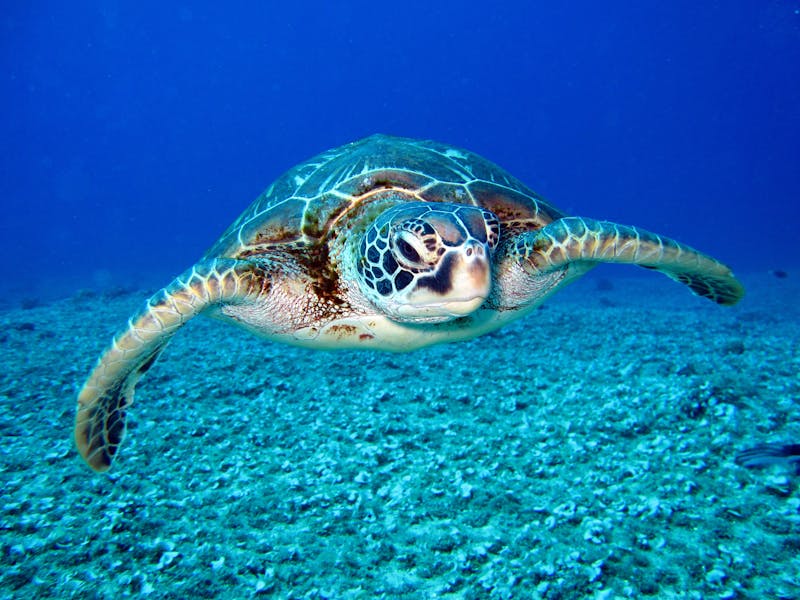
Most coastal snorkelers spend their time beside two reef-and-lagoon residents: the herbivorous Green sea turtle (Chelonia mydas), reaching up to 120 cm in shell length while grazing coastal algae flats, and the sponge-feeding Hawksbill turtle (Eretmochelys imbricata), easily spotted by its pointed beak among coral overhangs. Across Mediterranean sanctuaries including Laganas Bay in Zakynthos, Iztuzu Beach in Dalyan, and Lara Bay in Cyprus, the crustacean-crushing Loggerhead turtle (Caretta caretta) dominates warm summer months. Four rarer pelagic or regional specialists complete the global picture: the deep-diving Leatherback (Dermochelys coriacea) up to 200 cm long, the mass-nesting Olive Ridley (Lepidochelys olivacea), the critically endangered Kemp's Ridley (Lepidochelys kempii) in the Gulf of Mexico, and the Flatback (Natator depressus) endemic to Northern Australia's continental shelf.
Timing Water Clarity, Reef-Safe Gear, and Park Compliance
Cross-checking our 12-month seasonality matrix prevents arriving during monsoon swell or cool winter currents. Tropical grazing lagoons in Indonesia, Mexico, and the Maldives host resident populations almost year-round, whereas Mediterranean nesting bays, Australia's Ningaloo Reef, and Japan's Kerama Islands follow narrow seasonal visibility windows. Pairing the seven biological species profiles with tested non-nano zinc mineral sunscreens and UPF 50+ rashguards keeps delicate reefs unharmed while letting you stay warm without heavy wetsuits. Before paying for any boat trip, confirm whether local conservation laws mandate lifejackets, certified guides, or capped daily swimmer permits.
If your itinerary forces a choice between two nearby coves, start with our head-to-head destination comparisons. Placing entry fees, current strength, average depth, and visibility side by side helps cautious beginners pick sheltered shallow bays while stronger swimmers target outer coral drop-offs with confidence.